139
ISMS artifacts in the library — policies, procedures, registers, records
ISO/IEC 27001:2022 · IMPLEMENTATION & CERTIFICATION READINESS
Infosecurix runs first-time ISO/IEC 27001:2022 implementations on an AI-augmented method and a 139-artifact management system library, already proven through a live certification. We build the ISMS so it holds SOC 2, DORA, NIS2, PCI DSS, the CRA and the ISO extensions on the same controls and the same evidence repository — instead of three parallel compliance programmes.
Fixed 10-phase plan · 204 activities · Stage 2 audit target from week 12
Control Reuse — Indicative
Choose a framework to discover what your ISO 27001 implementation already encompasses.
| ISO/IEC 27001:2022 | SOC 2 Type 2 | PCI DSS V4.0.1 | NIS2 |
|---|---|---|---|
Clause 6.1 Risk assessment & treatment | |||
Clause 9.2–9.3 Internal audit & management review | |||
A. 5. 15 Access control | |||
A.5.19–A.5.22 Supplier & ICT third-party risk | |||
A.5.24–A.5.26 Incident management & reporting | |||
A.5.29–A.5.30 Continuity & ICT readiness | |||
A. 8. 8 Vulnerability & patch management | |||
A.8.15–A.8.16 Logging & monitoring |
ISMS artifacts in the library — policies, procedures, registers, records
Annex A controls assessed, justified and mapped in your Statement of Applicability
Phases from engagement initiation to certificate issuance and handover
Implementation consultants, plus an independent internal auditor for Clause 9.2
ISO/IEC 27001:2022 · IMPLEMENTATION & CERTIFICATION READINESS
We've seen the same three patterns in organisations attempting their first certification. Each one is a scoping and sequencing problem, not a security problem.
PATTERN 01
Downloaded policies get adopted without a risk assessment behind them, so the Statement of Applicability can't be justified and Stage 1 stops at documentation review.
PATTERN 02
The audit date is booked before controls have produced evidence of real operation. Access reviews, recovery tests, internal audits and management reviews are left too late, so readiness depends on last-minute activity rather than a planned evidence cycle.
PATTERN 03
Six months later a customer asks for SOC 2, or NIS2 lands in scope, and the work restarts from zero because nothing was mapped or structured for reuse.
THE METHOD
The plan is not written from scratch for your engagement. It is a proven delivery template, tailored to your scope in Phase 0 and handed to you as a working project plan with a full work breakdown structure, RACI and artifact register.
P0
Scope boundaries, stakeholders, plan tailoring, tooling and evidence repository stood up.
P1
Clause 4–10 and Annex A gap assessment, ISMS scope statement, and your multi-framework mapping baseline.
P2
Risk methodology, asset and risk register, risk treatment plan, Statement of Applicability with justifications.
P3
Clause 4–10 documentation: policy, roles, objectives, competence, communication, documented information, performance evaluation.
P4
Organisational, people, physical and technological controls. Runs in parallel with P3 via plan predecessors, not after it.
P5
Full-scope internal audit by an auditor independent of the implementation team, then a minuted management review with decisions and actions.
P6 - MILESTONE
Documentation readiness review by your certification body, inside the operational evidence window.
P7 - MILESTONE
Effectiveness audit. The window exists so records have real operating history behind them by this date.
P8
Nonconformity response, corrective action closure, lessons learned, handover of the complete ISMS to your owners.
P9
Surveillance-audit calendar, recurring obligations and an optional retained ISO to keep the system running.
AI-AUGMENTED, HUMAN-ACCOUNTABLE
Auditors are entitled to ask how your documentation was produced, and increasingly do. Here is the line we hold on every engagement, and the line you can state to your certification body without hesitation.

WHERE AI ACCELERATES

WHERE PEOPLE ARE ACCOUNTABLE
ONE MANAGEMENT SYSTEM
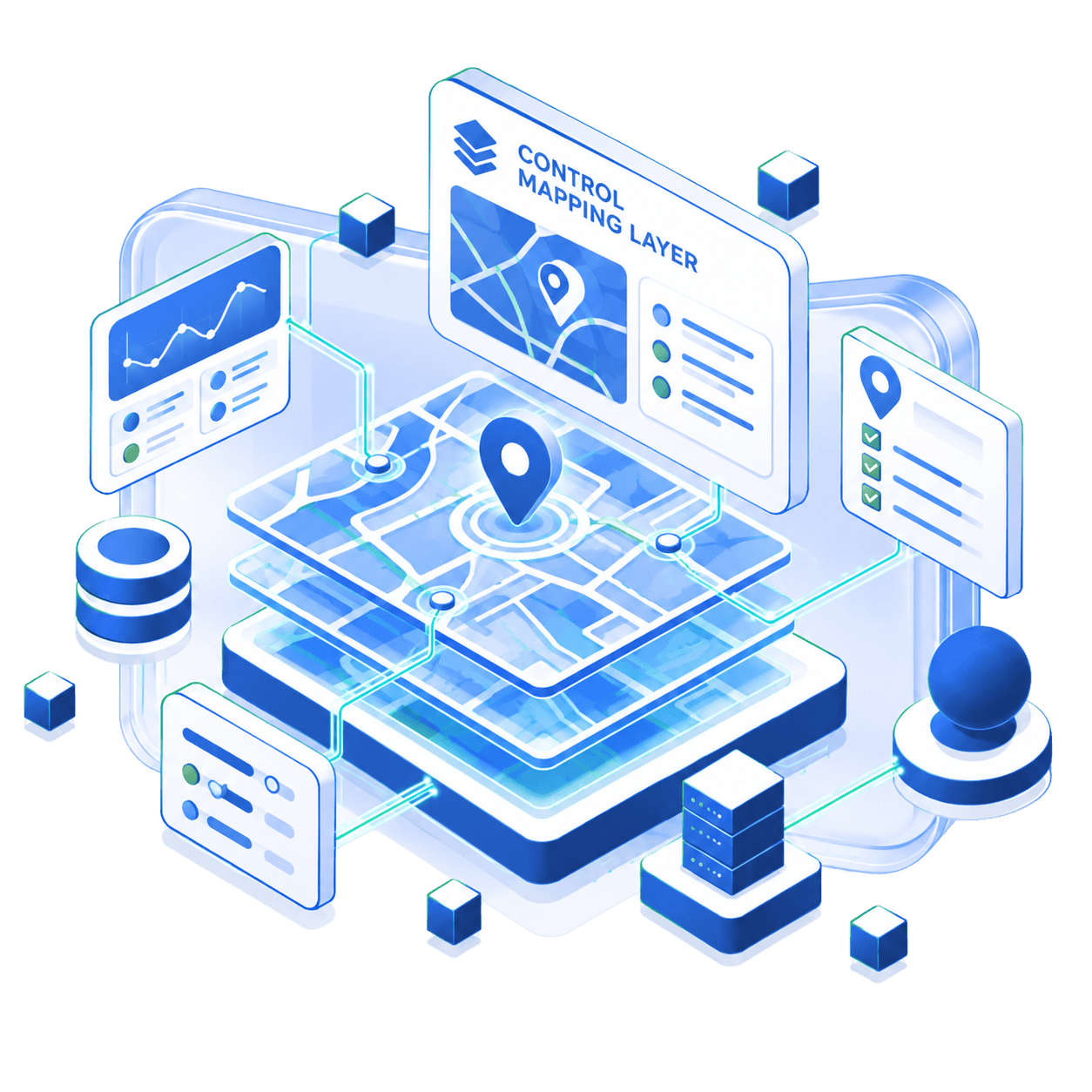
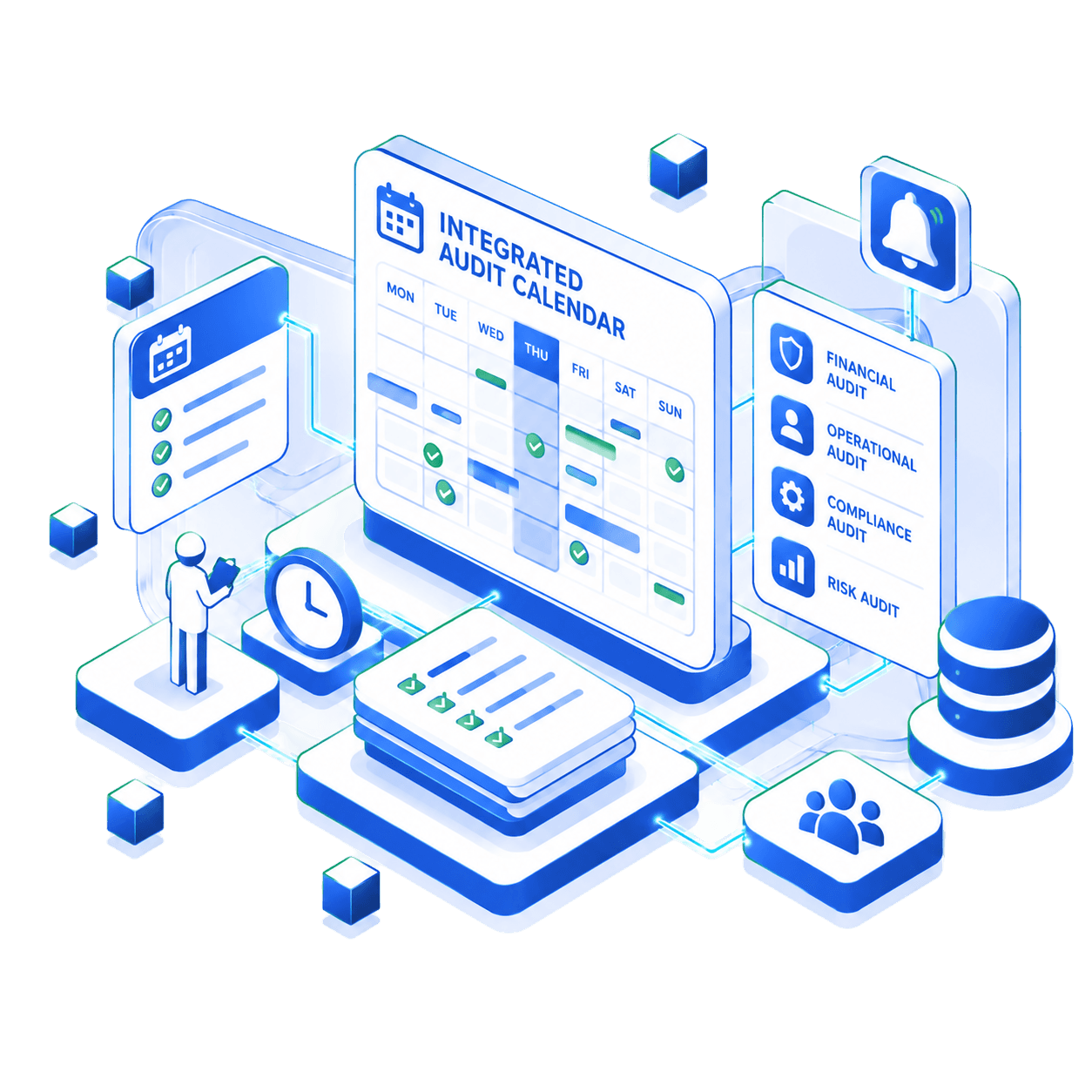
A unified ISMS means one control set, one risk register, one evidence repository and one audit calendar — with a mapping layer that tells you, for any control, which obligations it satisfies and which auditor will ask for it. You collect evidence once and present it many times.

CENTRAL EVIDENCE REPOSITORY
Access reviews, vulnerability scans, incident records, supplier assessments and training logs are stored once, versioned, with owner and review date. Each is tagged to every obligation it satisfies, so an auditor request resolves to an existing artifact rather than a fire drill.

Harmonised structure means Clauses 4–10 are largely common. The incremental effort is the discipline-specific content, not a second management system.
Applicability is confirmed in Phase 1. Where an obligation does not apply to you, we say so and drop it from the plan rather than selling scope you don't need.
WHAT YOU RECEIVE
Every artifact in the library carries a tailoring tier, so you can see exactly where our effort goes and where yours is needed. Nothing is delivered as a placeholder with your logo on it.
TIER 01
Stable structural documents. Branding, scope references and approvals confirmed, then adopted. Roughly two hours each.
TIER 02
Documents that must reflect how you actually operate — procedures, control descriptions, role assignments. Roughly six hours each.
TIER 03
Registers and records only your organisation can fill: assets, risks, suppliers, legal obligations, evidence. Roughly 24 hours each, with us facilitating

PROVEN, NOT THEORETICAL
The library, the phase model and the tiering all came out of a real ISO/IEC 27001:2022 build that went through certification — then were turned into a template so the next client doesn't pay for the learning curve.
WHAT CARRIED OVER
The management system library was built and certified against ISO/IEC 27001:2022 in a live engagement, including the 2022 Annex A control structure. It arrives at your project having already survived an external auditor, which is a materially different starting position from a template marketplace download.
The ten-phase plan, the RACI, the artifact tiering and the evidence mapping are all derived from that delivery.
BEFORE YOU BOOK
Our plan targets the Stage 1 audit from around week 6 and Stage 2 from around week 12, with both sitting as milestones inside the operational evidence window. That is achievable for a contained scope with responsive stakeholders. Broad scope, multiple entities, thin internal capacity or a certification body with limited availability all move the date, and we will tell you which of those applies to you in Phase 0 rather than after signature.
No consultant can guarantee an independent certification decision. We prepare your organisation through a scoped implementation plan, working controls, internal audit, management review and evidence-based readiness checks. If gaps remain, we identify them and agree corrective action before recommending progression. The certification body makes the final decision.
AI assistance does not replace the need for accurate, approved documentation that reflects how your organisation operates. We use AI to accelerate drafting, tailoring and consistency checks, with human review before documents enter your ISMS. Your team remains accountable for risk decisions, approvals and control operation. The important question is whether you can demonstrate that the system works—not simply how its documents were drafted.
Identify relevant obligations at the start, then sequence implementation around your business priorities. If a customer, contract or regulation already requires another framework, include its requirements in the initial scope. Where additional frameworks are a future possibility, structure the controls and evidence for reuse without implementing unnecessary scope. Shared evidence reduces duplication, but each framework still needs its own applicability assessment and any additional requirements addressed.
You do not need a large dedicated security team, but you do need an executive sponsor and people with the time and authority to own the relevant processes. We provide implementation expertise and help establish responsibilities across management, IT, HR, procurement and other functions. Your organisation retains ownership of its risks and controls. During scoping, we assess available capacity and identify where additional support is needed.
The ISMS becomes an ongoing operating responsibility. Control owners continue their activities, maintain evidence, review risks and suppliers, investigate incidents and track corrective actions. Internal audits, management reviews and certification-body surveillance remain part of the programme. At handover, we establish ownership and a recurring activity calendar. Optional fractional information security officer support can help maintain the system and coordinate future framework additions.
Your engagement has named implementation consultants, defined responsibilities and an internal auditor independent of the implementation work. We agree the delivery team and your organisation’s required participation before work starts. Consultants support implementation and readiness; your management and process owners make approvals and operate the controls. The external certification audit is performed separately by your chosen certification body.
[PROVEN, NOT THEORETICAL]
A unified ISMS means one control set, one risk register, one evidence repository and one audit calendar — with a mapping layer that tells you, for any control, which obligations it satisfies and which auditor will ask for it. You collect evidence once and present it many times.
We reply within one business day